Aug 31, 2006

India's Aviation Sector: Heads or Tails?

From the outside it looks like its boom time for aviation industry in India. It is not only the 25% annual growth in this sector that’s exciting but the aviation majors, Boeing and Airbus have plans to invest a total of Rs.20,000 crores in India.


India is emerging as the back-office and investment hub for global aviation majors, with aerospace majors EADS and Boeing committing investments to the tune of Rs 20,000 crore.

[…]

Boeing, which at present works with companies like Wipro, Infosys, TCS and HCL Technologies, is looking at increasing the amount of work given out to these technology companies.

The US-based aerospace company is also looking at expanding its scope of operations in the country. The company, which largely sells commercial airplanes in India, is also drawing up plans to tap the defence market.

EADS’s Rs 11,000 crore investment will largely go into setting up an engineering and research centre in India, while for Boeing the investment will be in the form of direct investment in facilities, research and development, sourcing of software and other equipment.

In addition, both the companies are looking at airplane maintenance facilities in India. Boeing has gone ahead with a Rs 185-crore announcement to set up a maintenance facility in Nagpur. Airbus is also expected to come out with a similar facility in the country soon.

A significant part of EADS’s investment will be for opening the EADS Technology Centre India, which will undertake work for all EADS companies, including Airbus, Eurocopter and the defence divisions.

It will also have Indian partners working on engineering and information technology services. The EADS Technology Centre India will create up to 2,000 jobs.[Business Standard]


Unfortunately, the future of aviation sector - growing at 25% annually and projected to grow at 20% annually for next few years - is bleak as long as it remains under govt control. Already the govt has stopped granting licences to new airlines to operate, as the present aviation infrastructure in the country is simply not enough. Under govt control its domestic airline “Indian” is at the #3 position. Indians when flying abroad want to avoid “Air India” like the plague. It is never the first choice of Indians. Moreover, the private airlines that are now flying are going deep into red due to rising fuel costs and lower airfares. The congestion of our airspace and at airports is also not helping the sector. To top it all, orders for about 400 new aircrafts are pending with Boeing and Airbus. As Indian govt is notoriously slow in decision-making, new aviation infrastructure will only come up at snail’s pace. By this time many of the players will find it simply unviable and pull out.

Complete privatisation at the earliest is the only answer. Sell off "Air India", "Air India Express", "Indian", and "Alliance Air". Then sell off all the airports except the strategically important ones. Allow private investment in developing existing airports and in building new ones.
Unfortunately this is not going to happen anytime soon because of the Left parties’ belligerent opposition as the employees belonging to Left Unions are a good source of moolah to fill up their coffers. Their fear of job loss in case of privatisation just won’t hold water in a sector that is growing at 25% annually. As new private airlines would need experienced personnel, excess staff of govt airlines would easily find jobs in the new private airlines. So it is in the best interest of the Left parties too to allow the UPA govt to privatise the aviation sector now. The Indian middle-class will also be eternally grateful to the Left parties if they allow the privatisation of our aviation sector.

Aug 30, 2006

Zidane's Scheming Intentions

Via Ahmad Mohib's blog:


As seen by the Germans:

Germans

As seen by the French:

French

As seen by the Italians:

Italians

As seen by the Americans:

Americans

As seen by Israelies:

Israelis

As seen by the press:

Press

As seen by the readers:

Readers

Readers at Mohib's blog suggested that Zidane was in fact saving Materazzi’s life.

Aug 28, 2006

Let Us Flex Our Muscles At Least Now

The Pakistani army using tanks, artillery, helicopter gunships and fighter jets hunted down Baloch nationalist Nawab Akbar Khan Bugti and killed him and others. Musharraf was true to his word on using any type of force to crush the Baloch rebellion and Uncle Sam just looked the other way when Musharraf used brute force to kill his fellow countrymen. No questions asked about the human rights of these people who are/were fighting for a fair share of the revenues generated by their province Balochistan. Uncle Sam’s silence on this brutal killing was expected - after all they need the Pakistani army to hunt down Al Qaeda terrorists a little toward the north on the Pak-Afghan border.

In all these years of Pakistan backed jihad in our part of J&K and elsewhere in India, we have never used brute force like helicopter gunships, fighter jets or tanks to hunt down and kill LeT, JeM, HM, etc terrorists who camp at higher reaches in the mountain ranges of the Himalayas after training at terrorist camps in PoK and other areas of Pakistan. If I recall correctly we even hesitated at first to use fighter jets to bomb Pakistanis and jihadis perched on Kargil peaks during Kargil incursion by the Pakistanis. Praveen Swami wrote recently how we are not able to destroy LeT camps in our J&K, as we cannot afford to spare additional troops.


.…Terror groups such as the Lashkar appear to be conserving their resources in well-established bases such as the Bandipora mountains of north Kashmir. Ever since 1999-2000, the Lashkar started developing fortified hideouts in the Patwan and Chatarnar forests, which served as receiving stations for terrorists who crossed the LoC. Protected by an elaborate system of lookouts, Lashkar operatives proceeded to establish weapon caches and communications centres.

Most important of all, the Bandipora base served as a centre from which operatives and explosives could be despatched for high-profile operations, such as the 2004 attack on the Prime Minister, the New Delhi serial bombings last Diwali, the assassination of State Minister Ghulam Nabi Lone - and, of course, the operation targeting the Chief Minister. While local Lashkar cadre facilitated the operation of the Bandipora-based strike squads, they did not involve themselves directly in executing the attack.

[…]
…Sources told Frontline that, at a June 20 briefing organised for United Progressive Alliance (UPA) chairperson Sonia Gandhi and Defence Minister Pranab Mukherjee, the Northern Army Commander, Lieutenant-General Deepak Kapoor, argued that the core problem was the lack of will among the 31,000 men of the Jammu and Kashmir Police and the Central Reserve Police Force (CRPF) who have been committed to the State capital.

At a subsequent meeting with National Security Adviser M.K. Narayanan though, police and intelligence personnel hit back. Officials argued that it was impossible to secure Srinagar unless the Lashkar's mountain bases were destroyed. Local operatives working for the Lashkar had repeatedly been arrested since 2002, Narayanan was told, but their commanders in Bandipora continued to operate with relative impunity because of the Army's unwillingness to flush terrorists out of the forests.

Targeting the Lashkar's north Kashmir fortress - or similar strongholds such as the Yaripora-Shopian mountain in southern Kashmir and the Harwan forests in central Kashmir - is not, however, a simple project. Since at least 2000-01, military strategists have considered the prospect of a pincer action against the Bandipora forests, involving simultaneously pushing troops south from the Bod Kol river near Gurez and north through Patwan and Chatarnar.

However, such action has been deterred by the twin prospects that the estimated 50-75 Pakistani terrorists hidden in the Bandipora forests might evade a large military operation - or, in the alternate, that an offensive push against well-defended positions could result in casualties not commensurate with the potential dividends. An offensive of this scale and the task of ensuring that the forests remain free of terrorists could require an additional Army division, a politically contentious move in the midst of a peace process.

Just what solutions will be found are impossible to predict but solutions are needed if the peace process in the State is not to remain mired in an impasse. Continued killings have worked to undermine the legitimacy of the peace process among audiences in and outside of Jammu and Kashmir. Meanwhile, renewed summer infiltration across the LoC have put paid to hopes that cross-border terrorism would gradually wither away. What some mistook as the end of the storm, it seems likely, was just a lull. [Frontline/The Hindu]


It is very clear that in order to secure Srinagar these camps should be destroyed without losing anymore time so there will be no more grenade attacks on innocent tourists who are the bread and butter of many Kashmiris. I am no military expert but still common sense tell me that to cut down on our casualties, brute force of the Indian Air Force is the best option to destroy these camps. It’s downright ridiculous that we just watched meekly as Lashkar went on building these fortified camps from 1999. Just what was the government thinking about? How not to violate the human rights of these jihadis and still destroy the camps or how to handle human rights lectures/admonitions from the West (read Uncle Sam)? Agreed we don’t have the guts to destroy jihadi camps in PoK and Pakistan because we fear a nuclear response from Pakistan but these camps are right in our territory and still we get fidgety in ordering strikes on these jihadi camps. Today the major constituents of the jihadi groups are Pakistanis, Afghans and professional jihadis from various Islamic countries and not Kashmiris. So we don’t have to be guilty of killing “our own misguided people”. These jihadis are eager to die for Islam so they can enjoy the company of 72 virgins in paradise. When this is the case why is the Indian government taking so long to send them to paradise?

Let us not forget that Islamists are neo-fascists who believe in the supremacy of their religion. These deranged people will show no mercy to any infidel in their quest of Islamic Utopia. When that’s the case let us too not show them any mercy and blow their camps to smithereens. As Praveen Swami wrote, what is clear, though, is that even successful counter-terrorism operations… …could prove of only limited use until means are found to evict terrorists from the forest fortresses.

This is an opportunity for us to send a strong message to jihadi Islamists holed up in J&K and other parts of India waiting to commit the next terrorist outrage. So, borrowing from the neocon lexicon, lets shock and awe them. Let us stop being a meek and submitting country.

Our government should remember that after about 59 years of independence we have been able to create a booming economy which is the toast of the world but it will be of no use if the people who are the backbone of this promising economy are sitting ducks for Pakistan backed jihadis to blow up whenever they feel like.

Aug 25, 2006

A Brief History of "Vande Mataram".

Here is a brief history of our national song, "Vande Mataram". It is a pity that it courts controversy and continues to be debated even after all these years. As long as competitive intolerance afflicts us, I guess we will have to live with it.


In the beginning were just the words. Reportedly one of the leading defenders of the song and of Hindutva has said that the song was written by Bankim Chandra Chatterjee to honour those who sacrificed their lives for the country. To defend the truth about the song from such defenders it needs to be said that when Bankim first wrote it in the early 1870s it was just a beautiful hymn to the motherland, richly-watered, richly-fruited, dark with the crops of the harvests, sweet of laughter, sweet of speech, the giver of bliss. For several years these first two stanzas remained unpublished. In 1881 this poem was included by Bankim in the novel, Anandamath, and now it was expanded to endow the motherland with militant religious symbolism as the context of the narrative demanded.

However, the icon of the motherland, “terrible with the clamour of seventy million throats”, likened to “Durga holding ten weapons of war” etc, entered the public imagination much later. This was from the beginning of Bengal’s Swadeshi agitation in 1905. It was sung in the Congress session in Benaras in 1905 (music composed by Tagore), in anti-Partition processions in Calcutta led by Tagore, in meetings addressed by Aurobindo Ghose. The latter hailed Bankim as the rishi of nationalism and translated the poem into English. Many translations were made, including one by Subramaniya Bharathi in 1905. Likewise, far away from Bengal, Mahatma Gandhi took note of the song as early as 1905. What is more, Vande Mataram became a slogan for the common man, to the extent he participated in anti-British agitations. Many of the militant nationalists faced bullets or the gallows with that slogan on their lips. Thus Vande Mataram became sanctified as an intrinsic part of the memories of the fight for freedom.

A third phase in the life of the song began in the 1930s when objections began to be raised against the song on two grounds: first, its association with Anandamath, which depicted the Muslims of the Nawabi era of the 1770s in Bengal in a poor light; second, the religious imagery and idolatry implicit in the stanzas of the poem following the first two. (Today those innocent of any knowledge of the song and the novel probably mistake the part for the whole). M.A. Jinnah, as well as a number of Muslim legislators in the provincial assemblies elected in 1937, became vociferous against the recitation or singing of Vande Mataram, a practice introduced by provincial Congress governments. In response to this, as well as pressure of Congress members, Jawaharlal Nehru in October 1937 wrote to Tagore asking for his opinion regarding the suitability of the song as a national anthem. The judgement Nehru received was that the first two stanzas of Vande Mataram should be accepted; as for the later part of the verse, Tagore thought it might offend monotheists, but the song was inextricably associated with the freedom movement and “the sacrifices of the best of our youths” since 1905.

Acting upon this advice the Congress Working Committee recommended that “wherever the Vande Mataram is sung at national gatherings, only the first two stanzas should be sung”. Jinnah wrote to Nehru in March 1938 that the decision was not to his satisfaction but the Congress stuck to it; in any event, there was a proviso that any one who wished not to participate was free to do so. From then on the song was a dividing line between those who doubted the wisdom of this compromise (C. Rajgopalachari) and those, led by Nehru, who were opposed to making the song obligatory. In 1939 some provincial governments — like Bihar and Central Provinces — issued specific instructions to education departments clarifying that the song was not obligatory. A fallout was that the slogan ‘Vande Mataram’ acquired special connotation to those who valued the Hindu symbolism in the song and by 1946-47 in some parts of India it became in inter-communal conflicts the battle cry of the Hindu community. The earliest instance of Hindu Mahasabha support to the sanctification of the song is perhaps the ‘Vande Mataram Day’ organised by the party in 1937.

The fifth and most recent phase in the life of the song commenced in the Constituent Assembly on January 24, 1950, when it was sung at the end of its deliberations. It was resolved that while Jana Gana Mana was identified as the national anthem, equally with it Vande Mataram was to be recognised. It was a motion from the chair, moved by Rajendra Prasad himself, and unlike other parts of the Constitution it was never debated upon in the Constituent Assembly.[IE]

Related Link: Here is Nitin Pai in defence of the right not to sing Vande Mataram.

Aug 23, 2006

White Man's Blood is Thicker

One aspect of the war on terror is very clear. The US and the West only feel the pain when their citizens are targeted by Isalmic terrorists. This is why as long as the Pakistan backed terrorists don't kill any white man in India, USA will not force Pakistan to crackdown on ISI-backed terrorist outfits that is waging its jihad against India. This is one reason why Al Qaeda's direct presence here will be detrimental to ISI's larger diabolical game plan for India as Al Qaeda's enemy #1 is USA, they will be more interested in killing Americans than Indians (read Hindus). This was clearly illustrated during the 2002 Bali bombings, which was done by an Islamic jihadi group linked to Al Qaeda. Muslim Indonesian island of Bali has a Hindu majority. If Al Qaeda's main enemy were the Hindus, then they would have gone around bombing Hindu temples, etc in Bali and not target places frequented by Westerners. This doesn't mean we can completely rule out Al Qaeda's presence in India because they have been on record about Hindus being their enemy apart from Americans and Jews. And the recent serial bomb blast on Mumbai commuter trains bear the hallmark of an Al Qaeda job. According to B. Raman Lashkar-e-Tayiba, Harkat-ul-Mujahideen, Harkat-ul-Jihad-al-Islami and Jaish-e-Mohammad backed by the ISI are members of Osama bin Laden's International Islamic Front For Jihad Against the Crusaders, Jews and Hindus. We cannot also rule out the presence of Al Qaeda sleeper cells in India established by brainwashed NRI Muslims having no links with Pakistan's ISI. If Al Qaeda is in India with the blessings of ISI, then there will definitely be a tacit/tactical understanding between them not to target Westerners in India.

IMO the recent US Embassy warning to its citizens in India about Al Qaeda attacks was actually breadcrumbs thrown at us to pacify and show us that they care for us too and are with us in the fight against terror. All this time the West was actively engaged with Pakistan in foiling the UK terror plot as it was meant mainly for the white man. As long as Pakistan is needed for the West in its war against terror so the white man can sleep safely, USA will not share with us intelligence that will implicate Pakistan's blood-soaked hand directly or indirectly in terrorist activities against India. Even if we provide
irrefutable evidence, USA will prefer not to believe it as we saw recently during Richard Boucher's visit. This is why as long as the white man doesn't get killed by ISI-backed jihadis in India, USA will always look the other way after issuing the routine condolences.

In this post I might have sounded like a racist, which I am not. But IMO this is why USA is lukewarm to India's troubles.

Jul 21, 2006

Why Wal-Mart Should be Here

It Will Contribute to Household Savings!


Wal-Mart Stores, the largest retail chain in the world, is secretly going to allow people to steal from its outlets. According to internal memos leaked to the media, the company, which is already the leading destination for shoplifters, will no longer prosecute first-time thieves unless they are between 18 and 65 and steal merchandise worth at least $25.
[.....]
Actually there's a solid reason for this: It's just not financially justifiable to expend more than twice the amount in order to prosecute someone who's stolen something worth $5. The legal costs required are simply too high.
Or as a person in charge of asset protection at Wal-Mart put it: "If I have somebody being paid $12 an hour processing a $5 theft, I have just lost money. I have also lost the time to catch somebody stealing $100 or an organised group stealing $3,000".
Unorganised kleptos and hobby shoplifters will immediately realise what a bonanza awaits under-aged and senior citizens of India should Wal-Mart be allowed FDI in retail for which it's been trying so hard.
For one thing $25 translates to over 1,100 bucks here. Which means if an average family has two live-in minors and two grandparents they should easily be expected to bring home nearly 5,000 bucks of stolen goods every month.
[.....]
Will others narrow the age limit instead to prosecute only thieves between 35 and 36? The National Retail Federation of the United States says American retailers lose more than $30 billion a year to theft. [TOI]

Jul 20, 2006

Dumb, Dumber, Dumbest


Yesterday my ISP too blocked access to blogspot.com but I hardly had any problem accessing all the blogspot.com weblogs I visit. Rest of the weblogs I read hosted on other blog hosts/servers are easily accessible via the right way.

The Indian government has done a dumb thing by banning specific weblogs, which has only helped the banned weblogs win more traffic, and the Indian ISPs have done a dumber thing by blocking access to weblogs hosts instead of blocking access to the specific weblogs the government wanted banned. They say they don’t have the technology to ban sub-domains. Well if you don’t have, go and get it. To top it all, my ISP has done the dumbest thing – they have blocked access to blogspot.com but I can still post the correct way. Now I don’t have to tell you the blog readers how we post on weblogs hosted on blogspot.com. ;-)

Am I Dangerous?

At last the govt has got my ISP to block my access to blogspot.com. Does that mean I am dangerous? If not yet, the cut and paste job below would justify banning me. ;-)
Here is all that you ever wanted to know about the Weapons of Mass Destruction(not the Iraqi ones).


What are the types of Improvised Explosive Devices (IEDs)?
IEDs can be easily made at home by any graduate for a few hundred rupees. The essential components are explosives, detonators, trigger circuits, power supplies and timers. The power supplies are usually provided by batteries (AA, AAA, 9V). The trigger circuits can be cell phones, cordless phones, transistor radios, remote control toys and garage door openers. Trip wires are also used, especially when specific people are targeted, as they cannot be electromagnetically jammed — although they can be detected by sensitive metal detectors.
The timers can be electronic circuits as used in quartz circuit watches. Chemical and me chanical timers were also in use until a few years ago. The March 1993 Mumbai blasts used chemical timers while the February 1998 Coimbatore blasts used mechanical timers.
The best known plastic explosive is RDX (Research Department eXplosive), chemically cyclo-tri-methylene-tri-nitroamine). Other commonly used plastic explosives are PETN (Penta-erythritol Tetra-nitrate), Semtex (a mixture of RDX and PETN), and more lethal RDXbased explosives like C3 and C4.
Ammonium nitrate/fuel oil mixture (ANFO) is another explosive used. Ammonium nitrate is widely used as an agricultural fertiliser. The fuel oil can be diesel, kerosene or molasses. ANFO is widely used in coal mining, quarrying, metal mining and civil construction.
No one yet knows for sure what explosives were used in the Mumbai blasts. Some sections of Mumbai Police have stated that it could be RDX, while others suspect gelatin.

How difficult is it to manufacture IEDs?
All the components of an IED can be assembled from readily available sources without arousing suspicion as they all have legitimate uses.
RDX is manufactured by reacting concentrated nitric acid (available in every school lab) with hexamine. Hexamine is widely used as a medicine as well as an industrial chemical. Hexamine can be prepared in one’s kitchen by reacting two common chemicals — formaldehyde and ammonia. Purchasing large quantities of hexamine won’t arouse any suspicion as it is used as an antibiotic for treating urinary tract infections, preservation of cheeses, as well as in brake and clutch linings, abrasive products, non-woven tex tiles, fire-proof materials, rubber and textile adhesives and in paints and lacquers. There are reportedly dozens of cottage factories producing RDX in Maharashtra, Kerala and Gujarat.
PETN is even more easily available as it is used as a heart medicine. The vasodilator, Lentonitrat, is almost pure PETN. Less than one kg is required to bring down an airliner. All one needs to do is to buy a kilo of Lentonitrat from a medical supplier and install detonators and trigger circuits. Nor would the making of ANFO get anyone suspicious. Farmers buy tonnes of ammonium nitrate to use as fertiliser. ANFO is widely used in India in coal mining, quarrying, metal mining and civil construction. Gelatin sticks can easily be stolen from any mining or construction company.
How can IEDs be detected?
Plastic explosives like RDX, PETN, C3, C4, etc. are almost impossible to detect in the field by any practical means. Metal detectors don’t work against them. If they are made by an expert, they are odourless, look like children’s plasticine and can be moulded into any shape. Even highly trained sniffer dogs have had very limited success in differentiating them from food products.
Tests which can detect the chemicals involved in plastic explosives, like Neutron Activation Analysis, Gamma Ray Irradia tion and Laser Spectroscopy require equipment costing millions of dollars. They also require one to go very close to the suspected explosive. At best, these equipments can be used at entrances of airports or VIP security zones.
How can IEDs be prevented from exploding?
VIP zones and motor convoys are usually protected against Remote Control IEDs (RCIEDs) by electromagnetic jammers. These jammers emit high power radiowaves in HF, VHF, UHF and microwave bands. If they are of higher power than the signals transmitted by the terrorist, they either jam or prematurely detonate the IED.
But the use of jammers causes a lot of trouble to the general public. If a terrorist brought an RCIED within range of a jammer, the RCIED could instantly explode. While the VIPs would be saved, there could be many more civilian casualties in the streets outside. Also, since the best jammers work over the entire frequency range of 20 Hz-2,000 MHz, they would interfere with cell phones, television and radio reception. And electromagnetic jammers work only against RCIEDs and not against IEDs.[HT]

Phew! now I am surely dangerous!

Jul 9, 2006

The Taste of Cyanide

....“Prasad mixed a pinch of the potassium cyanide powder, he carried in a plastic cover with the liquor and stirred it with the other end of the pen with which he was signing off.” But he may have accidentally put the “poisoned” tip of the pen into his mouth before completing the note. When he realised his “folly”, he hurriedly wrote a few lines: “Doctors, potassium cyanide. I have tasted it. It burns the tongue and tastes acrid.”[HT]

Jun 14, 2006

Jun 12, 2006

Army's Kashmir Conundrum

The following is an article from the Hindustan Times by Omar Khalidi on Indian Army's recruitments from the state of Jammu & Kashmir.


Joining the army can be considered the ultimate proof of loyalty to the state and acceptance of its legitimacy. This is especially true for countries without conscription. If people inhabiting a region torn by international conflict join the army of one side or the other, they confirm their identification with the state. Conversely, the recruitment of particular groups into the forces will be an indication of trust the state reposes in the group. If the region has a diverse population, the preferred choices of the various segments of the population will be another indication of their interest or the lack of it in the army. The region of Jammu, Kashmir and Ladakh offers almost a laboratory-like condition where one can test the interest if not the loyalties of each population segment.
Kashmir has been the bone of contention between the people of the region, India and Pakistan for six decades. Muslims of the three regions collectively constitute the majority. But the Muslim population is diverse: Kashmiri-speaking Muslims are different from Jammu, Poonchi, Bakkarwal, and Gujjar Muslims. The Ladakh population is divided between Muslims and Buddhists. Dogra Hindus and a small number of Sikhs live in Jammu. Each of the three regions and the respective populations relates differently to the Indian state and its army.

Before independence, the Maharaja’s army, the Jammu & Kashmir (J&K) Rifles consisted of Dogras, Rajputs, Sikhs and some Muslims from what is today Azad Kashmir. The Maharaja excluded Kashmiri Muslim subjects from enlisting in the army. At independence, the army split along religious lines during the war with Pakistan in October 1947. The Hindus remained on the Indian side while Muslims chose Pakistan. Shortly after independence India abolished Princely States’ Forces, including Hyderabad’s predominantly Muslim army. However, the Hindu-dominated J&K Rifles, symbolised by its denominational war-cry “Durga Mata ki Jai” was retained and absorbed in the Indian army. The J&K Rifles is composed of men from Doda, Poonch and Rajouri villages, mostly Hindus. Regardless of the constitutional arrangements between Srinagar and Delhi, the region of Jammu and its largely Hindu inhabitants are fully integrated with India and identify as such. There has been no dearth of recruits from this area for J&K Rifles or other regiments. Unlike Valley Muslims, Muslims in Poonch do not share the same degree of alienation as do the Kashmiris, which explains why a woman like Wahida Prizm and her husband Maj. Fuad Khan earned a commission.

The Hindus of the Valley (the Pundits/Brahmins) rarely joined the army, not because they did not qualify or were distrusted by the state. They shunned the army — TN Raina, the chief of the army staff from 1975-78 being an exception — because they have better opportunities elsewhere. There are reports however, that the Army and the Air Force was especially recruiting Kashmiri Pundits, in the refugee camps in Jammu and Delhi.

Like the Jammu Hindus and Kashmir Pundits, the Buddhists of Ladakh identify completely with India. Many Ladakhi Buddhists are skilled mountain warriors, especially in high-altitude mountains’ snowy, whiteout conditions. The Buddhists, together with Tibetans, constitute the Ladakh Scouts (LS), upgraded as a regiment in 2000. Ladakh Muslims, a majority in the Kargil district were represented far fewer in numbers in LS, about 4 percent. But as part of Operation Sadbhavna, launched in late 2000 by Lt. Gen. Arjun Ray, the army undertook border-area development to win the confidence of the population, including villages like Turtuk, part of Azad Kashmir until 1971 war, when India wrested it from Pakistan.

Some officers — Maj. Gen. V.S. Budhwar, in particular — suspected the Turtuk villagers, Balti-speaking Muslims of loyalty to Pakistan. However, as part of the Operation Sadbhavna, more Muslims were inducted into the LS, increasing their percentage to 30, thus earning the confidence of the population.

That leaves the question of Kashmir Valley Muslims in the army. It is in the Valley that there is strongest resentment to a perceived army of occupation indulging in large-scale violence, illegal detentions, and rape. Few joined the Indian army. Those few Kashmiri soldiers who died fighting for India in 1999 Kargil war were not mourned in their villages. Given the resentment of large sections of Kashmiri population, it is understandable that middle class men would not want to enlist in the army.

According to the National Sample Survey only 3.5 per cent of Kashmir's population was below the poverty line in 1999-2000. The national average was as high as 26.1 per cent. So the pull factor for the army is much lower than in other states. However, a decade and a half of fighting since 1989 has increased poverty in Kashmir and fatigue if not disillusion with the highly splintered Mujahidin factions, often at loggerheads. This is what explains that increasing attraction of the army for the poverty-stricken, war-weary Kashmiri youth that has began enrolling in the army in thousands since 2001.

In conclusion, Kashmiris indicate a un-uniform pattern of recruitment in the Indian army. The people of Jammu and Ladakh Buddhists are most enthusiastic for the army. Initially, the Kargil Muslims were less recruited but since 2001, their percentage is increasing in the Ladakh Scouts. Finally, the army is attracting initially reluctant Valley Muslims, which bode well for India, ill for Pakistan.[HT]

Securing India?

On one hand the government in planning to do away with police verification of the address of a passport applicant and intends to shift to the system of issuing passports only on the basis of identification of an applicant. On the other hand the government wants to toughen its anti-hijacking policy.

In a country where government officials are corrupt to the core, doing away with police verification may make it easy for Indians to get genuine passports but is not going to make any difference in controlling terrorists and illegal immigrants from obtaining legitimacy as Indian citizens when fake passports and fake identification papers are available for a song. Bangladeshi illegal immigrants have all the identification papers in order than most Indians should actually have!

Maybe moving to biometrically enabled e-passports, which could deter passport thefts and forgeries could be the solution. A number of countries are about to launch trials of passports and visas that incorporate basic biometric information about the document holder alongside the traditional photo and passport number - data such as a digital image of the citizen's face that will be compared to a facial scan taken at the airport.

In India however, e-passports, which could be the size of an ATM card, would replace present day passports by 2013.

Jun 9, 2006

100 Million and Counting

Eleven years after mobile telephony was opened up for private participation, India has grabbed fifth place in the world in terms of total mobile phone connections shipped.
With 100 million mobile phone subscribers, India now ranks after only China, the US, Russia and Japan in absolute numbers of mobile phone connections, the government announced on Thursday.
[.....]
Telecom operators have been saying that the mobile subscriber count has grown at 4-5 million every month this year.....
[......]
‘‘We are now in the M-5 club, and we should be happy. There is no need to find unnecessary loopholes since we are sure of making it to 250 million phones by 2007 and 500 million phones by 2010.....’’ the Minister said.
At present in India, subscribers are counted on the basis of the number of SIM cards or connections sold. The government will now consider moving to a system of counting the total number of active connections. [IndianExpress]

Gagan: India's Eye in the Sky

Indian Space Research Organisation (ISRO) and Airports Authority of India (AAI) are at work to provide a modern navigation system over the Indian airspace.

The system, christened GAGAN or GPS and Geo Augmented Navigation, will be a Satellite Based Augmentation System (SBAS).

GAGAN will be operational by end 2007. For Delhi Airport it would mean less delays during the winter months when fog throws air traffic out of gear. GAGAN will operate like Category IIIA Instrument Landing System, helping flights land in near zero visibility conditions. Its accuracy will be within 1 metre. It will provide both lateral and vertical guidance.
Worldwide, ships and aircraft use two core constellations to determine their position - the GPS system of the US and a similar Russian system.

These set of satellites send a time-stamped message to the aircraft and ship, helping it fix its location and route. The position accuracy achievable with these core constellations (GPS and GLONASS) is 30 metres and not good enough for precision approach and landing requirements of civil aviation in India. These need to be augmented. GAGAN, with its satellites and ground-based transmitters will fill this gap over the Indian airspace.

There are three types of augmentation systems - Ground Based (GBAS), Aircraft Based (ABAS) Space/Satellite Based (SBAS). The ground and aircraft based systems have several handicaps - not available over the oceanic (Indian Ocean) airspace, unable to cover India's territorial airspace, performance dependent on terrain conditions, expensive to maintain and require periodic calibration.

GAGAN is being implemented in three stages:

Stage I: Technology Demonstration System — is complete.

Stage II: Initial Experimentation Phase — year-long, under process.

Stage III: Final Operational Phase — scheduled for 2007.[HT]

Jun 8, 2006

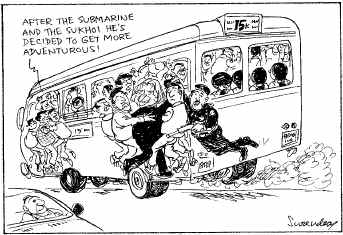
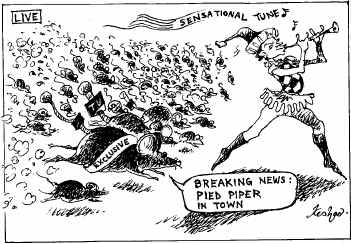
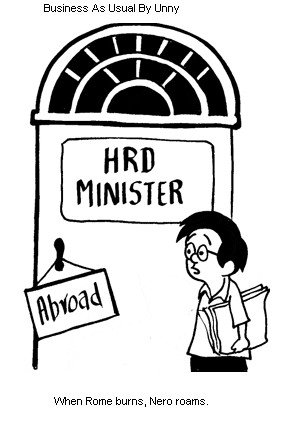
Cartoon Speak

Courtesy: The Hindu.

Jun 7, 2006

Where Are You Partying This Weekend?

....Dubai, Maldives, Singapore, Thailand, Malaysia or Sri Lanka!

Lightning Over "Dolphin's Nose"


Photograph from The Hindu. Photo: Mr. K.R. Deepak.

Website for Carpools

With fuel prices going up dramatically, carpooling is an increasing option somuch so that now there is a website where one can search for carpools in one's city and also post free adverts for potential carpoolers.
Apart from saving fuel it is also environment friendly - less cars on the roads mean less air pollution.

Some Business Sense This!

CNN-IBN yesterday reported on the amount of moolah Natwar Singh and Gang made in the oil-for-food scam. This is how it was divided up:

  • Andaleep Sehgal received approximately Rs 30.14 lakh.
  • Coburg approximately Rs 19. 8 lakh.
  • British lawyer John Ball of Fynmores Solicitors received Rs 6.38 lakh.
  • Aditya Khanna made Rs 7.89 lakh.

The total this gang made comes to Rs.64 Lakhs approximately! After all the trouble all they could make is this ridiculously paltry amount!? They could have easily made this amount in the stock markets in one good week!

Now what about the moolah Congress Party made? Now how much is that and who is going to expose them?

Jun 1, 2006

Tailor Made News from Jammu & Kashmir

Is the electronic media reporting the truth from Jammu & Kashmir? After reading this news item from GreaterKashmir.com, I am afraid our electronic media is tailoring news to suit our sensitivities. I think this is wrong and the correct news should be reported after verifying from both ends.

As soon as they saw our vehicle, they charged towards us menacingly, threateningly. “You media buggers what do you report. We tell you one thing and you narrate a different tale,” shouted a youth among a large group of people in Wutlab.
“What do those b#$%^^^ in Radio Kashmir and Doordarshan report. Why did they lie that Jehangir was a militant. He was just a student and was protesting with us,” shouted another.
“These (news) channels say Navy personnel were helping to pull out the bodies of children. Yesterday when we went to fish out the bodies of those innocent children, these Zaalims (cruel) soldiers fired at us. And what did those channels report? Fishermen fished out the bodies and Navy is deriving mileage out it. They are responsible for the death of those children. We told those reporters everything and were shocked to hear them telling a different tale on TV screens,” shouted another youth.[GreaterKashmir.com]

Almighty's Secret

This quote is from an article in Pakistan's Daily Times. Reading it I almost rolled on the floor laughing.

Religious fervour now borders on the ludicrous. For example, many if not a majority of the auto-rickshaws in Dhaka proclaim at their back that “Allah is almighty”, while others announce that they are “equipped with a 4-stroke engine”. I noted one that combined both statements, the first followed by the second.[Daily Times]

Incredible Idea!

We will have to give it to the Mallus when it comes to promoting their state in every conceivable way as a tourist destination. They pioneered houseboat tourism, medical (ayurveda) tourism, election tourism, monsoon tourism, etc and Kerala's previous UDF govt wanted to promote new products like pilgrim tourism, adventure tourism and farm tourism.

Maybe Kerala doesn't have slums otherwise Delhi's latest touristic offering would have been pioneered by the Mallus too! With 260 million Indians still below the poverty line, slum tourism has bright prospects ahead.

Of course it is sickening but if this can provide these people with a livelihood and can lift them up from grinding poverty then we must swallow our pride and welcome this.

May 31, 2006

This One Says It All


Cartoon from Indian Express

Yippee! Its 9.3%!

Yes, the GDP grew in Q4 by 9.3%! Now if the gods are going to bless us with abundant rains this year, then this rate is only going to improve. So buckle up for the exciting ride ahead for the economy. Interest rates could further rise .
BTW, the full-year GDP growth for 2005/06 was 8.4 per cent as compared to 7.5 per cent in the previous fiscal.

From My Heart

Listen to Your Conscience

I am very much disturbed by some of the recent developments in this country of mine. First of all it’s the reservation issue on which I didn’t voice my opinion earlier because I knew it was sheer political opportunism by the UPA govt to win the OBC votes in next year’s UP state elections. Medicos are leading the anti-reservation agitation and because of this, poor patients are suffering for no fault of theirs. I completely support the anti-reservation movement but I think it is high time now Engineering, Law, MBA, etc, students and people from the private sector took the lead. I think Medicos should go back and treat the patients. The Socrates Law by which the Medical fraternity swears thus states:


The Socrates Oath (The Modern Version)

I swear to fulfill, to the best of my ability and judgment, this covenant:
I will respect the hard-won scientific gains of those physicians in whose steps I walk, and gladly share such knowledge as is mine with those who are to follow.
I will apply, for the benefit of the sick, all measures [that] are required, avoiding those twin traps of overtreatment and therapeutic nihilism.
I will remember that there is art to medicine as well as science, and that warmth, sympathy, and understanding may outweigh the surgeon's knife or the chemist's drug.
I will not be ashamed to say "I know not," nor will I fail to call in my colleagues when the skills of another are needed for a patient's recovery.
I will respect the privacy of my patients, for their problems are not disclosed to me that the world may know. Most especially must I tread with care in matters of life and death. If it is given me to save a life, all thanks. But it may also be within my power to take a life; this awesome responsibility must be faced with great humbleness and awareness of my own frailty. Above all, I must not play at God.
I will remember that I do not treat a fever chart, a cancerous growth, but a sick human being, whose illness may affect the person's family and economic stability. My responsibility includes these related problems, if I am to care adequately for the sick.
I will prevent disease whenever I can, for prevention is preferable to cure.
I will remember that I remain a member of society, with special obligations to all my fellow human beings, those sound of mind and body as well as the infirm.
If I do not violate this oath, may I enjoy life and art, respected while I live and remembered with affection thereafter. May I always act so as to preserve the finest traditions of my calling and may I long experience the joy of healing those who seek my help.

Written in 1964 by Louis Lasagna, Academic Dean of the School of Medicine at Tufts University, and used in many medical schools today.

Reading this it is very clear that a doctor’s first duty is to attend to the sick. The doctors should find other peaceful means of protest – like wearing black coat, black bandana, etc. At least the medicos should heed the Supreme Court's directions in this matter.


Enough is Enough

Another thing that is bothering me is the developments in Gujarat. All that Aamir Khan asked was to properly rehabilitate the people who will be displaced once the Sardar Sarovar Dam’s height is increased. For this some Gujaratis labelled him anti-Gujarat. Everyone knows the importance of the dam for the states of western India but that doesn’t mean we trample upon a section of our people to provide water to another section of our people.

The Aamir Khan Vs Gujarat spat is now reaching preposterous levels of insanity. As Gujarat cinemas fearing violence by politicians have banned “Fanaa”, some guys who obviously are big Aamir Khan fans decided to go to Mumbai to watch the movie. Now some fellow Gujaratis have labelled them ‘traitors’ and don’t want them back in Gujarat and they also want them expelled from University. The ban however doesn’t stop anyone in Gujarat watching pirated version of “Fanaa” on DVD.

Hatred and intolerance in BJP ruled Gujarat a.k.a laboratory of Hindutva is a grave matter of concern. Sonia Gandhi’s pet project NREGA, (which has been badly trashed by some economists) could become – if initial reports are to be believed – a successful project in giving employment in rural areas. If India’s rural economy can grow by1%, it will translate into a 10,000 crore market for goods and services. Just this week ‘‘Indian Express” has exposed how in Narendra Modi’s Gujarat, Hindu villagers have left Muslims out of this project in most areas. There are exceptions in Gujarat where Muslims and Hindus are together in this project.

Recently in Vadodara after a very old dargha, which was declared as an encroachment was demolished, riots broke out and as usual Hindus and Muslims killed each other. How long are the Gujaratis going to live like this? Can’t they forgive each other and live peacefully? Why bring a bad name for rest of us Indians? Why do they link everything to Gujarati “asmita”? What about India’s ‘asmita’? Are they more Indian than rest of us? Where is this madness going to stop? There was a time when Gujaratis were held in great esteem by rest of us Indians for their business acumen and hospitality. Today it is different and it is a sad development.

May 30, 2006

Digging One's Grave?

Kumar Ketkar in an article in Indian Express explains how the present pro-OBC stance of Congress will ultimately harm the party than do any good for them. The article is very informative on caste politics of independent India.


Not many people remember Charan Singh, the man who appointed B.P. Mandal to head a commission in the late ’70s to collect data on the Other Backward Classes (castes), belonged to the Congress Party till the mid-1960s. He left the Congress to form Bharatiya Kranti Dal because he felt the agriculturists did not get justice and a fair deal in the Nehruvian system.

The Jat leader of Uttar Pradesh’s farmers was actually reflecting the aspirations of the “middle peasantry”. Translated in caste terms, it meant that the so-called OBCs (sometimes known as middle castes, and also “forward castes”) were left out and impoverished by the Congress Capitalism. Almost all Lohiaite socialists and some communists at once empathised with Charan Singh. While the capitalists used to criticise Nehru for being socialist, the socialists and comrades would often condemn him for being capitalist.

Charan Singh was not advocating the cause of the agricultural labour, surviving far below the poverty line, nor was he championing the demands of the landlords. He was articulating the political and economic ambitions of the OBCs, who were not part of the Congress System. The Congress System was a rather vague manifestation of aspirations of all classes and castes. Till the mid-sixties that vagueness helped the party to appeal to all sections of the electorate. But two decades after Independence, there were murmurs of resentment in the rural north. The so-called Hindi belt had not gone through social movements and the production relations remained steel-framed by the tight caste structure.

The Congress culture had been able to co-opt the Scheduled Castes and Tribes by offering them affirmative action in the form of reservations. Indian society took these reservations in its stride. There was a feeling of guilt among the upper castes, which actually were at the helm of all the parties of the Left and Right. The conservative opposition to those reservations did not cause protest, like the one we are witnessing today.

The OBCs may have been poor but were not untouchables. Also, a large number of them owned land and cattle. Many OBCs were skilled craftsmen. The OBCs occupied a vast socio-economic space in rural India. They were hostile to the former untouchables. Indeed, caste relations between the OBCs and the BCs were far more vicious and violent than between the upper castes and the dalits. Most dalits were landless labourers and lived at the mercy of the OBC landowner. There were a few upper caste landlords, but by and large the agricultural means of production were controlled and owned by the OBCs.

The upper castes had learnt quite early, almost by intuition, that the future belonged to the knowledge industry. They had begun to invest in education. Therefore the primary contradiction in the rural society was not Brahmins versus the BCs, but the BCs versus the OBCs. Indeed, hardline casteism prevailed more among the OBCs and even the BCs, as they observed the hierarchy very strictly. Whether it was drawing water from the village well, going to temple or marrying a lower of higher caste partner within BC or OBC ranks, it generated hatred, murder or mass violence.

Landlordism was formally abolished in 1951, but it had taken other forms. The restructured landlord and his henchman, the moneylender and their allies in the police and bureaucracy represented the actual ruling class. The well-off OBCs represented that ruling class. This class began to become more and more assertive and aggressive after acquiring larger economic clout in the ’60s. Charan Singh became its spokesperson.

This OBC aggressiveness was predominantly a northern phenomenon. Maharashtra and the southern states had their versions of middle-caste political movements but the violence and viciousness was not so intense there.

The Congress political culture received its first jolt in the ’67 elections, as it lost power in the entire north. The newly formed Samyukta Vidhayak Dals were nothing more than the casteist OBC fronts. Indira Gandhi had come to power just about a year ago. It was a blow to her and the rivals within the party decided to challenge her leadership. The party was split in 1969 and she had to once again take a kind of ‘hold all’ approach to appeal to all sections of people. The slogan “garibi hatao” reflected the old Congress style. The OBC fronts and their Left allies could not hold on to power, as they could not mobilise allies. Also, the OBC base was not large enough.

Their opportunity came in 1977, when the Janata Party came to power. The so-called JP movement had actually mobilised this class and given it political legitimacy. To consolidate the political gains after coming to power, the Charan Singh faction confronted Prime Minister Morarji Desai and the compromise was the Mandal Commission.

But the collapse of the Janata Dal government and Indira Gandhi’s return stalled the OBC advance. She knew the OBC rebellion was aimed at destroying the Congress culture. She shelved the Mandal report, submitted to her government in 1980. But the OBC mobilisation continued and was challenging the Congress in every village in the north. But for Indira Gandhi’s assassination in 1984 and remobilisation of Indians transcending caste and religion, the Congress would not have come to power with such stunning majority under Rajiv Gandhi.

Rajiv was politically naive and did not initially understand the craftiness of his deputy, V.P. Singh. It was not merely Bofors and Ayodhya that defeated the Rajiv Congress. It was defeated by the OBC armies. How many people recall today that Mulayam Singh Yadav and Lalu Prasad Yadav gained clout after 1989? Both are products of the JP movement.

V.P. Singh was going to complete the cycle started by Charan Singh. When he announced unilaterally the implementation of the recommendations of the Mandal Commission, he was consciously destroying the mass base of the Congress. He knew that the Congress could be kept out of power by appealing to this new OBC power and destroying the delicate balance that the party had been able to maintain. He may have lost power, but he ruined the rainbow coalition that the Congress had represented from the days of the freedom movement. Ironically, Arjun Singh used to hate V.P. Singh then, not for political but for personal reasons. But today the same Arjun has picked up the same bows that VP had collected to attack the Congress.

If the Congress System succumbs and surrenders to the Mandal conspiracy today, it will have committed political suicide. It seems that the party leadership is paralysed and does not know how to deal with this Mandal bolt. Arjun Singh knows what he is doing just as his predecessors, V.P. Singh and Charan Singh, knew what they were doing. All these Singhs have only one aim: to wipe out forever the Congress Coalition, which represented the whole of India. If the Congress Coalition is weakened or wiped out, the day would not be too far when the Indian state too would wither away, like the Soviet state did.


I just don’t agree with Mr.Ketkar when he says that without the Congress the Indian state would wither away. He is underestimating us Indians and the power of political parties like BSP. Already BSP is very confident of coming to power in the center in 10-15 years time. The Brahmins must have realized this already and perhaps that explain why in UP they are joining BSP in large numbers. I am still to figure out what Arjun Singh will get by wiping out the Congress party from India.

May 29, 2006

Press Versus Bloggers

Finally, the mainstream press worldwide is feeling the heat from the blogger community. So much so that they are discussing how to beat the bloggers and citizen journalists to the story in the International Press Institute's World Congress in the Scottish capital, Edinburgh!
Now this shouldn't surprise the blogger community at all. After all didn't the best coverage of the London bombing, South Asia Tsunami, etc was by the bloggers. Recently Nitin's success in getting Harper Collins to correct the error committed by Clinton in his foreword to Madeline Albright's book is worth being noted. IMO this is the biggest success for an Indian blogger till date.
Rajdeep Sardesai's CNN-IBN is very keen on partnership between citizens and the mainstream media. Their Citizen Journalist initiative is a commendable one in this regard. They encourage citizens to contact them with "breaking news" from their respective areas and after verifying its authenticity, it will go on air.
More Power to Bloggers!

May 23, 2006

‘‘India is not a democratic country’’

‘‘India is not a democratic country’’. ‘‘The biggest PR mythof all times is that India is a democracy. In reality, it is not,’’


The loony lady is at it again. Once again in a foreign land as usual she attacks her “motherland”. This time she has crossed all acceptable limits. Midway from a book reading session in NY, she thus pontificated. Then this educated twit said:


She was confused, as India was passing through a terrible time.

“Terrible time”?! So a country growing at 8% is having a terrible time. I have some minor renovation work to be done at home and its been three weeks and I am yet to find a mason who can spare some time.


‘‘There is no real democracy in India. Several states in India are on the vergeof c ivil war,’’ she said.Challenging the much-acclaimed views of columnistThomson Friedman praising India, a democracy of a billion population, forconducting peaceful elections year after year, she said, ‘‘He probably needs anew tour of India... Does Thomas know that in Kashmir Valley alone, some 80,000people have been killed? In Iraq, there are 1,50,000 military personnel, whereasin Kashmir Valley there are some 7,00,000.’’


When she talked about civil war I thought she was referring to the polarisation of the country due to the reservation issue. The ignoramus that I am should have known better. For that terrorist sympathiser what is troubling is those ‘poor’ Kashmiris getting killed in JK and the seven-lakh strong Indian army’s presence in JK. Now this is not the first time she has made such remarks. Why does she hide the fact that the 80,000 (the figure is pretty old now… Roy, next time do add some more zeros for greater effect) killed in Kashmir include civilians, terrorists and army men? And that the majority of the civilians were Muslims and were killed by Paki trained Islamic terrorists. If she loves those Kashmiris so much why restrict her love only to the ones on this part of LoC? Why no concern for the people of Gilgit, Baltistan and ‘Azad Kashmir’ who are treated by Pakistani Punjabis as their “subjects”.


The Naxals kill with impunity poor people from Andhra to Nepal who are pretty similar to the ones she was recently supporting in New Delhi and not a single condemnation has been there from her till today.


Yes, we do hold peaceful elections year after year and one round of state elections just concluded with her favourite party winning in two states.


Now, that according to this nutcase we are not a democracy, the moment she lands here, she should be arrested for anti-India activities. No, better still, let us do a Musharraf on her – declare Arundhati Roy a persona non grata. After that she must be very welcome in Pakistan to live the rest of her life there.

Related Link: Sandeep recommends Ms.Roy Saudi Arabia, China, etc apart from Pakistan.

May 22, 2006

Why Attack Friends?

THE FACE OF TERROR

That is the picture of one of the terrorists who attacked the Congress Rally in Srinagar on Sunday. But what baffles me is that why do the terrorists kill their friends when they are helping them in all possible ways.

May 19, 2006

Tribal Shining

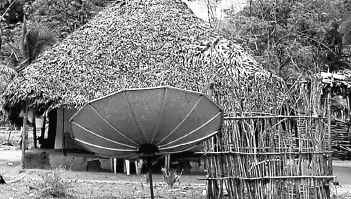
A fast changing India doesn't leave anyone behind - the tribals including!

Cinema theatres or dish antennas to TV sets are no more entertainment to tribals in East Godavari agency area. Modern trends and life styles have already entered the huts of tribals even in interior forest areas like Maredumilli, Addateegala and Rampachodavaram. Recent introduction of Direct-to-Home dishes by Dooradarshan started gaining popularity in these Maoist-affected areas as laying of cables by private cable operators is not only costly, but also difficult in forest.
"Paying Rs.200 to Rs.250 per month is so expensive. So, three to four families who are mostly relatives bought DTH dishes from Rajahmundry and getting more than 40 channels through it," said Kunjam Pentannadora of Chinabarangi village of Rampachodavaram mandal.
During last 15 years some of the tribal houses have got portable black and white TVs in villages like I. Polavaram, Musurumilli, Seethapalli and Devipatnam areas. "First it was black and white TV in my house and we bought colour TV two years ago.
But, the programmes in Doordarshan or some times one or two Telugu channels with dots started coming with antennas," said Goragapudi Chandrarao, who passed SSC and is running a petty shop in Addateegala mandal headquarters.
When a few of the literates in the agency heard about DTH last year, they bought DTH dishes on monthly instalment basis and started enjoying almost all the Telugu, Hindi and other TV channels. "We are relaxing after we got DTH system this January. We are following Telugu TV serials regularly," said Kalum Singaramma, who works in Girijana Cooperative Corporation minor forest produce procurement centre on daily wage.
The TV channels also brought changes in tribal youth, who started wearing modern dresses in a few villages near to Rampachodavaram, Gokavaram and Korukonda.[The Hindu]